
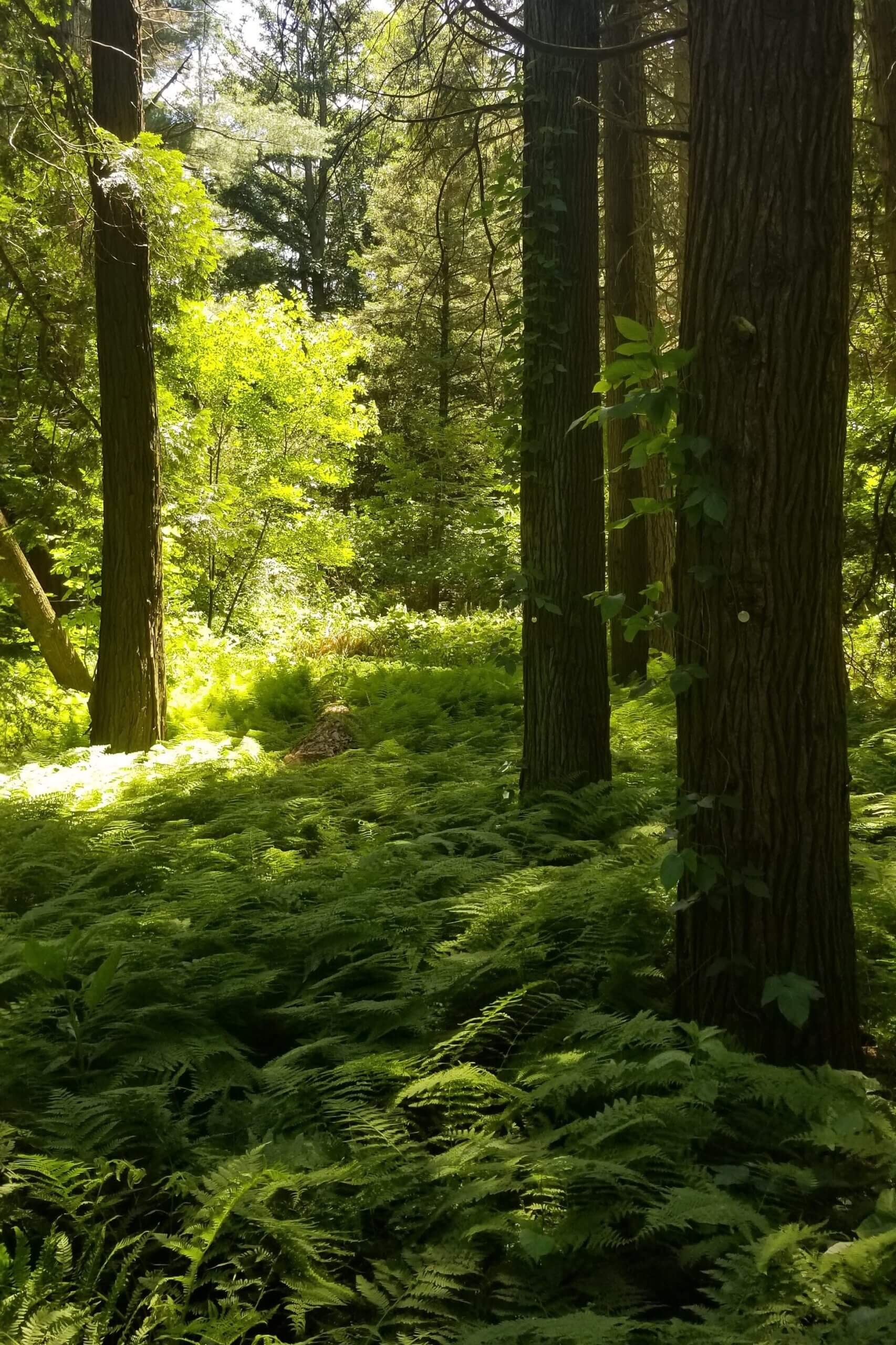
The museum’s living collections are found on its 145 acres, officially known as the William Cullen Bryant Preserve, and include an arboretum, nature trails, a native plant garden, and a formal garden. The land has a long history. It owes its unique and varied topographical features to the glacier that receded from here more than 10,000 years ago, leaving behind hills and ravines, ponds and boulders. The Manhasset Indians were its earliest recorded inhabitants, and the 17th and 18th centuries brought Dutch and English settlers and farmers. In the 19th century, it became William Cullen Bryant’s Upland Farm and then a country estate in the late 1890s, before finally becoming a museum and preserve open to the public in 1969.
The property is still a lush and varied landscape with fine specimen trees, including Tulip tree, American beech, oak, hickory, and maple, a collection of conifers, steep forested ravines, old fields in various stages of succession, reclaimed native grass meadows, well-maintained grass fields, and gardens. It is also home to a number of birds and mammals, including great horned owls, hawks, deer, foxes, rabbits, and chipmunks.
Image: The pond located across the field behind the Mansion in Autumn reflects changing foliage and Allen Bertoldi’s “Wood Duck”, 1979